Google+
Showing posts with label Consumer. Show all posts

Brand positioning

The distinction of value and status that a brand carries within its category. This positioning ensures that customers and prospects from the brand’s target market can distinguish it from its competitors. The successful strategy for Brand positioning should involve varied and well studied elements, integrated in accordance with the image of the brand and the company’s business objectives.


See also: Brand competition, Product positioning

Brand attributes (Brand associations)

Rational and/or emotional associations entailed to a brand by its customers and potential buyers. They can be favourable or unfavorable; tangible or intangible; positive or negative and also can have varying extends of relevance and significance within the different consumer groups and customer segments. Brand attributes originate from customer experiences and should correspond to the specifics of brand positioning and differentiation in a category.

See also: Brand pyramid, Brand architecture, Brand equity

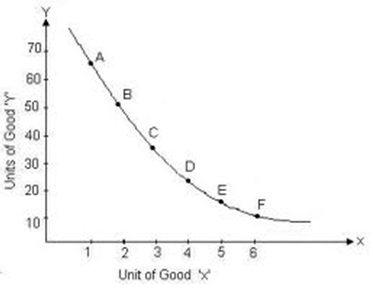
Indifference curve

A graph used to illustrate the effect of different quantitative combinations of goods on consumer satisfaction and behavior. A quantity of one good is shown on axis x and a quantity of another one – on axis y. The curve that is formed illustrates that certain consumers are equally satisfied at each curve’s point.


Baby busters (Baby Buster Generation)

The youths born between 1965 and 1976 in US, representing 47-50 million consumers. It is also known as generation Xers. Demographic term deliniating the generation that was born in the United States between 1965 and 1976 - the first decade of the so-called X-generation. The birth rate then was extremely low, especially compared to the baby-boomers between 1946 and 1964.

Customer experience (CX)

Customer experience assembles all interactions between a customer and a company, including awareness, purchase, usage, maintenance, loyalty, etc. Regarding CX, special attention is being paid to subconscious perceptions during contacts with company’s good or services, i.e. how a customer would feel like.

Inner-directed consumers

Consumers who tend to rely on their own “inner” values or standards when evaluating new products and who are likely to be consumer innovators.

Consumer ethnocentrism

A consumer’s predisposition to accept or reject foreign-made products. Researchers have developed and tested the consumer ethnocentrism scales called CETSCALE.

Testimonials

One of the popular formats of an advertising where a person praises the product or service on the basis of his or her experience. Testimonials also use celebrities for a product or service who speak highly of its benefits in order to influence consumers to buy.

Consumer cooperatives

A type of retail format, which is owned by its consumers. In this type of retailing consumers contribute money to open their outlets, vote on its policies, elect a group to manage it, and receive patronage dividends.

Inference

Involves the development of an association between two stimuli; for instance, consumers may associate high price with quality.

Green consumers

Environmentally aware consumers.

Business-to-consumer (B2C)

One of the major Internet domains where there are interactions between consumer and organizations. This term is generally used in the context of e-commerce transactions over the Internet. B2C e-commerce transactions have increased many folds in the recent times for a large numbers of consumer products and services. The Internet is most useful for products and services when the shopper seeks greater order convenience or lower cost. It is useful when buyers need information about product features and prices.

Extended self

This is the modification or changing of the self by which consumers use self-altering products or services to conform to or take on the appearance of a particular type of person (e.g.. a biker, a physician, a lawyer, a college professor).

Experiential marketing

One of the client side tools that may be used in the CRM, it gets the consumer involved to create the memorable experience offline or online.

Core competency

A term used to describe all those resources and capabilities that a particular company is able to utilize in a more efficient manner than its competitors. In reality core competency makes up the essence of business.
Core competency has three characteristics:
(1) It is a source of competitive advantage in that it makes a significant contribution to perceive customer benefits,
(2) It has a breadth of application to a wide variety of markets, and
(3) It is difficult for competitors to imitate.

Functional consequences

Outcomes of product or service usage that are tangible and can be directly experienced by a consumer.

Cues

Stimuli that give direction to consumer motives. Cues serve to direct consumer drives when they are consistent with consumer expectations. Therefore, marketers must be careful to provide cues that do not upset those expectations.

Consumer research

The various types of research methodologies used to study consumer behaviour. This may include both positivist and interpretivist approach to consumer behaviour. ( consumer research process )

MAN approach

In the context of consumer research, it is a qualifying method that involves answering questions about a prospect’s money, authority, and need to buy.

Collectivist cultures

Cultural orientation that encourages people to subordinate their personal goals to those of a stable in-group; values such as self-discipline and group accomplishment are stressed.